Monday, 23 March 2015

Colonial Mentality And The Value of A Death


My late Aunt shared her compound with an old man called Joseph. We all called him Yozefu when we were growing up. He was a likeable character with a penchant for smoking tobacco. He coughed incessantly as a result. When I started working in the big city, he would always ask me to take him cigarettes and antibiotic medication whenever I visited Aunt. The antibiotics were for his chronic cough. But the years were beginning to show and he had grown frail with time. He loved to sit on the veranda of his single-room abode in the evenings, cigarette in one hand and a stern drink in the other. That was his biggest weakness but we had all learned to put up with his habit.

So when Aunt called late one night to tell me that Yozefu was no more, I was quite devastated. I knew that I was going to miss the man sorely, his booming laughter and his endless jokes.

At 2pm the next day, we bade farewell to my old friend Yozefu. None of us was sure about where he came from but that was not important. He had lived with us so long that he became family and his ancestry never mattered to us. His funeral was a modest one devoid of any ostentation and was led by the parish catechist. We spared no expense to give him a decent send-off. As we huddled together at the graveside, the tears flowed freely. But I was gratified that we had laid him to rest with dignity at our ancestral burial grounds, just like one of us.

When we returned home, Aunt wept inconsolably. I knew it was not just the pain of losing a family member but also because she knew she was going to be by herself in the big house. She would have no one to talk to or laugh with, and no one to absorb the blows of her legendary temper. I comforted her as best as I could to no avail. We served the mourners a meal and by sunset, most people had returned home save for a few close family friends.


Aunt Elizabeth (RIP)
Thus the life of an unassuming man came to a simple end. Together with the people of the community, we mourned Yozefu and bade him farewell, and everyone went about their ordinary lives the next day.

About a month later I received another call from my Aunt. She sounded quite agitated and I soon found out why. One of our close neighbors had lost his elder brother who was living, as she put it, “in outside countries”. Aunt was fast becoming the bearer of bad news. I vaguely remembered the deceased. He had a complicated name that gave us trouble pronouncing so we simply called him Mr. K. I also recalled that we always referred to him as “the one who lives in outside countries”.

For the uninitiated, death in my culture is a very big deal. If the time devoted to funerals and burials is not seriously checked, it can eat up a significant portion of one’s calendar. When people die, it is almost a given that they will be buried at their ancestral homes. The majority of these are usually located hundreds of kilometers from the capital city. Burying someone in a public cemetery is an insult to the dead person and an abomination to the surviving relatives. Cemeteries are usually reserved for the unlucky few who have nowhere to be buried and the unfortunate aliens whose remains cannot be flown back home.

When the news went out that Mr. K had passed on, shock and sadness engulfed the entire community in equal measure. He had been a good man and generous to a fault. Whenever he flew into the country, the village folk would flock to his home to receive all manner of provisions. No one ever left empty handed. Strangely, a good deal of them often whispered behind his back that he was a tad too arrogant but his large heart always won the day.

In the course of the next few days, Aunt kept me abreast of developments regarding Mr. K’s funeral arrangements. From our daily conversations, I pieced together a picture of what was happening in the home of the deceased.

Aunt told me how her fellow village folk made such a fuss over the fact that Mr. K had died from “outside countries” or the land of the “bazungu”. (“Bazungu” is plural for “muzungu”, a generic term for Caucasians or whites)”. What amused me to no end was the obvious tone of disdain in her voice at her friends’ “maalo” (something akin to lack of exposure, but not nearly). I figured that in their view, it was a badge of honor on Mr. K’s part to have breathed his last “from outside”.

Because of this simple fact, Mr. K’s death bore great significance in the eyes of the village folk. The biggest news was that his body was going to be returned home on a plane. This too caused quite a buzz. The closest most of these poor folks ever get to a plane is when the big bird occasionally flies overhead en route to some exotic “muzungu” lands.


Mr. K’s body was eventually flown back home after two weeks. People gathered in large numbers to pay their last respects and several white tents were erected in the spacious compound to accommodate them. Ancient hymns and solemn funeral tunes blared from a large public address system, ostensibly to encourage the living and soothe their frayed nerves. Death does that to people, you know. Food and drinks were constantly available and the whole ceremony took on a festive tone. This went on for three consecutive days.

On the day of the burial, every available space in the compound was taken up by mourners from near and far. Together with an impressive ensemble of priests, the bishop of the diocese led the mass and the deceased was well eulogized. I noted that most of the speeches pointed out how Mr. K had died from “outside countries”.


The mourners

I spoke to my aunt at intervals during the funeral and she kept marveling at the expensive coffin in which the deceased lay, all disdain gone from her voice. She said that everything was done the “kizungu” way, loosely, “like the whites”. Everyone who mentioned anything to do with a white skin on this day seemed to say it with a sense of admiration. Or was I “hearing” phantoms?

On my way back home from the funeral my mind pondered the events of the previous three weeks since Mr. K’s passing. I could not help drawing parallels between Yozefu’s simple burial ceremony and Mr. K’s lavish one, and how everyone made much fuss of the latter having lived in and died from “outside countries”.

Is it possible that black Africans and non-whites in general have an innate obsession with everything Caucasian? We adore as superior virtually everything about them, from the color of their skin to their technology, their clothes to their hair. We imitate their manner of speech and acquire affected versions of their accents whenever we travel to their lands, even if for a fleeting period of time.

The only plausible explanation I could come up with for this Caucasian obsession was that the colonial mentality was alive and well with us. It exists not just among those simple village folk awed by a death abroad but even among the “elite” and well-educated in the big cities and towns in my country.

According to Wikipedia, a Colonial mentality is a conceptual theory (that points to) feelings of inferiority within some societies post-European colonialism, relative to the values of the foreign powers which they became aware of through the contact period of colonization. The concept essentially refers to the acceptance, by the colonized, of the culture or doctrines of the colonizer as intrinsically more worthy or superior. The subject matter is quite controversial and widely debated.[1]

Look at some of the experiences I have had in my country Uganda.
  • When I go shopping in Kampala’s malls with my muzungu friends, it is not unusual for the till attendants’ demeanor to change dramatically when the muzungu’s turn at the till arrives. In an instant, their English accents often morph miraculously to try and match that of the muzungu.
  • When I dine out with said muzungu friends, the bill is invariably presented to them even if it is me picking the tab. Ironically, when someone eats at exotic diners, people will say that he or she eats in the manner of a muzungu (alya nga muzungu).
  • Most people who live and work in the West are usually described in glowing terms as “ba muva bulaaya” or those who hail from the white man’s land. Several statements which have the word muzungu in them often connote bigger, better, and more luxurious than local equivalents. They speak of that which is to be desired, to be aspired to.
  • When someone accumulates a lot of wealth or power here, it is said of them in a local dialect, Luganda, that “afuuse muzungu” or “azunguwadde”, literally, one who has transformed into a Caucasian or muzungu.
  • There are many things/situations that people consider to be superior in make/appearance and which they cannot easily relate with or describe adequately. They will usually refer to these with a sense of awe as “ebintu by’abazungu” or the things of whites.
  • Most imported technology is often called “ekyuma ky’omuzungu” or the white man’s machine.
I could go on and on. I used to find all this behavior from my fellow Ugandans quite frivolous and annoying but I have since learned to let it pass. These days I just smile at the endless episodes in comedy that it presents me with.

Make no mistake, the colonial mentality is not unique to Uganda or even Africa. It spans continents and civilizations and is to be found in different shades wherever an indigenous people were colonized at some point in their lives.

On the Indian sub-continent for example, Thomas Macaulay, the 19th century British historian and colonial administrator regarded British culture as inherently superior to the Indian one. He played a pivotal role in replacing Indian languages with English as the medium of instruction. This process is often referred to as “Macaulayism”. Subsequently, the term “Macaulay's Children” is used to refer to people born of Indian ancestry who adopt Western culture as a lifestyle. Needless to say, it is often used in a derogatory fashion, and the connotation is one of disloyalty to one's country and heritage.

A controversial portion of a speech purportedly made by
Lord Macaulay in the British Parliament
Further east, the United States serves as a prime example of the colonial mentality with both its “One Drop” rule and the "Paper Bag Test". The One Drop rule is a historically prominent sociological/legal principle of racial classification which proposed that any person with even one ancestor of sub-Saharan-African origin ("one drop" of Negro blood) was considered to be black.

On the other hand, African Americans were allowed or denied entry in Black-only social institutions using the Paper Bag Test. People at many churches, fraternities and nightclubs would take a brown paper bag and hold it against a person's skin. If a person was lighter or the same color as the bag, he or she was admitted. People whose skin was not lighter than a brown paper bag were denied entry.


Would you pass the test?
These and similar stories abound in former colonies like Canada, Quebec, The Philippines, Latin America and many others. In most of these places, discrimination based on skin color (or color-ism), is not uncommon. White skin is considered ideal and the lighter one’s skin tone, the higher their chances at succeeding in life.


I find black skin breathtakingly beautiful. But colonial mentality suggests that black is not to be desired, that Euro-centric physical features, not black, are aspirational. In search of ideal white beauty, many women have contributed to the multi-billion dollar skin bleaching industry. Colonial mentality blinds them to the fact that these skin bleaching products usually contain the harmful ingredients mercury, hydroquinone, and/or corticosteroids. These chemicals can be extremely dangerous and fatal.

No social community can exist in a vacuum. Every race, ethnicity and nationality has lots of positives that others can borrow from and assimilate. Without doubt, some races have achieved better than others in the fields of mathematics, engineering, sports, the arts, etc. But this by no means makes them superior to their less endowed counterparts. To classify any race as less than the next one, either by insinuation or mass propaganda, is to exert undue pressure on them to aspire to myopic ideals.

If a colonial mentality spurs people on to higher achievement in the arts, education or technology, then that is by all means desirable. But I feel that there is nothing of significance to be gained from lightening one’s skin tone or from the thinking that a shade lighter is a shade superior. And yet deep inside me I am not unaware that the color of colonial mentality is many shades lighter than my African ebony skin.


The Ebony Shades continuum
I slowly disengaged from the world of race and color and returned to my present reality, passing by Yozefu’s grave to pay my respects. I plucked a flower from a nearby bush and as I laid it on my friend’s simple grave, it dawned on me that in life as in death, the colonial mentality holds sway. Deaths that are in any way linked to the white man have clout. They are weightier and far more “valuable” than those which occur a myriad of times every day among the ordinary Ebony folks of this wretched earth.

What a way to die!

Suggested further reading on the subject:
http://www.theinclusionsolution.me/the-impact-of-colorism/

Wednesday, 4 February 2015

How To Drown A Date


I catch a whiff of a very expensive scent that causes me to look up from my plate. My nose happens to be quite adept at picking out the exotic ones. O, and I absolutely love a good scent, courtesy of my significant other. This particular one is quite out of character with the place. Not that there is anything the matter with the diner but there are some places I classify as "for certain people" and not others.

I am just in time to see a shapely backside with a walking pair to match sashay past my table. The manner of her dress confirms what my ever-reliable nose had picked out earlier—some class. Not a single strand of what is obviously her expensive weave is out of place. In tow is a man who in my quick evaluation belongs. Tall, handsome, clad in a large blue t-shirt, baggy pants and shoes all the color of ebony. Even his skin tone matches. I smile inwardly at the pair.

I would have ignored the incongruous couple and gone on with the business of taming my hunger had Mr. T-shirt not guided Ms Shapely to the table where I sat. It is a four-seater, I was the lone diner there and three vacant chairs beckoned. Obvious choice, and why not anyway? He pulls a chair for her, waits for her to fit her shapely self into it and goes over to pull one for himself. A true gentleman.

The pair is now seated directly in front of me and I am perfectly positioned to steal appraising glances at the fairer one without appearing to stare. Fine looks, olive skin, blue-striped sleeveless blouse. I quickly size up the two, confirming my earlier take. A coupling of here and not-here. Do I read discomfort in her smile and posture? Yes, definitely. I am good at that as well. But Mr. T-shirt is right at home in this place. Now I knew who of the two had suggested the diner in the first place.


Quick as flash, a waitress materializes to attend to the couple. It is not lost on me that I had sat for the better part of 15 minutes without anyone bothering to as much as nod in my direction. I had even contemplated walking out at some point but the hunger pangs jabbing at my belly had persuaded me to stay put. But I am not one to gripe over such trivialities; after all my order had eventually been served.

But I digress.

The orders are quickly called. Mr. T-shirt: cassava, posho, rice, and luwombo of fish in groundnut sauce. Such tough carbs but I nod imperceptibly in approval, a true man of the place. Without waiting for Ms Shapely to have her say, he quickly blurts out an order for her, with the confident air of a man who is on top of things: chicken and chips.

I am already picturing three hot, crunchy, golden-brown drumsticks nestled among several long, thin, golden-yellow slivers of fried potatoes when I am rudely awakened from my culinary reverie.


Woman waiting on couple: we do not serve that food here.

Mr. T: What will you have?

Ms S: Do they have fresh fish?

Woman: Yes we do.

Bring her fish and rice, he quickly interjects.

Life’s good, obviously! I am glad the two chose to sit at my table, this is going to be one very interesting lunch.

Then the conversation starts in hushed tones but I can make out the story unfolding before me. I gather that Ms S is Mr. T’s date and he seems to be out to win her affections. He speaks fairly good English but I swear I cannot hear a single word of what Ms S is saying. Very soft spoken, and again, out of place in this loud diner where you literally have to shout to be heard. She smiles occasionally at Mr. T who keeps talking animatedly. Nice set of teeth. I am three quarters of the way through my meal by now but I make up my mind to step off the gas and draw out the remainder of my time at the table.

Their orders presently arrive and the woman-in-waiting elaborately opens the luwombo for Mr. T. His face lights up considerably. It is going to be a delicious meal. Ms S is presented with the order Mr. T made for her, a mound of steaming white rice on an over-sized, chipped porcelain platter. Accompanying this is another platter on which the fish rests, half submerged in its own soup.


What drinks will you have?

Mr. T opts for cold water. After a moment’s hesitation, Ms S decides she will have a glass of fresh juice.

Because of his chosen seating arrangement, Mr. T cannot see his companion’s face. I wonder why he inadvertently sat her facing me and chose to sit sideways from her. But that is a mundane matter right now. As a direct result, he misses to see the look on her face when she is presented with her food. Absolute bewilderment masked by a faintly lame smile.

Well manicured fingers reach out gingerly for the cutlery, specifically a spoon. The routine goes thus: scoop out some fish soup, pour it on the rice and attempt to eat. Eyes lifted slightly from my near-cleaned plate, I am taking in every movement of the fingers and the cutlery. I can even afford to look further up at her face because I know that all her attention is on the food and she will not see me. It is now all creased in consternation. Have I missed something? Maybe, maybe not but I can swear that S has seen hordes of all manner of dangerous microorganisms swimming in the fish soup and crawling all over the rice.


Every trip of the spoon to the red, luscious lips is a protracted exercise in agony. T is too lost in his heaven of luwombo to notice his companion’s troubled demeanor, let alone care. I told you, life’s gorgeous.

The drinks arrive. I would not be too bothered to give S’ juice a second look. Apparently, neither would she who ordered for it in the first place. Thin and yellowy it looks, the glass presented uncovered and sitting on another over-sized plastic tray. What is with these people and larger-than-life crockery? My eyes are now scrutinizing S’ every expression. You would be forgiven to think that I am conducting a research for my doctoral thesis.

Did I say that she occasionally steals glances at me? Well, she does. It must be the deadpan expression she finds me wearing each time she looks in my direction. He he he. She gives the juice one lo-o-o-ong, hard look, the kind a mother usually reserves for her little boy when he plays irritating pranks in front of the visitors she told he was the most adorable boy in the neighborhood.

I could be wrong but there is no way on this planet that S is going to as much as attempt to drink from that glass. T is really enjoying his luwombo, making light banter while at it, blissfully oblivious of the scenario developing right next door. S continues to carefully pick at her mound of microorganisms while I go about the mundane business of pretending to clear the scattered nibbles still resting on my plate.

I am starting to lose interest in the goings-on in front of me so I beckon to the young man who attended to me for my bill. But knowing the time it took him to process my order in the first place, I know I am in for a lengthy wait so I might as well make myself busy. My next destination is my area electricity supply office, they had earlier asked for a sketch map to my home to make some installations there. I fish a pen and paper out of my rucksack and get to work.

Half way through the sketch, I hear S let out a muffled “OMG”, like the microorganisms had suddenly developed wings and were flying off into space. Fearing the worst, I look up from the sketch but everything still looks exactly as I left it a minute earlier except that both S and T have abruptly suspended the exercise of decimating their respective meals. Two pairs of eyes are now fearfully trained on the glass of yellowy juice.

Following their gazes, I soon discover the reason for their mortified expressions. But in all honesty, T’s seems to me more amused than anything else. There in front of all three of us, plain as day, is a navy blue housefly furiously flapping its wings and paddling all three pairs of legs, frantically fighting for its life in the lake of juice.

Seemingly unbothered while furiously taking mental notes, I go back to finishing my sketch but not before glancing in the direction of S. Our eyes lock fleetingly and I mouth a pained “sorry”. She quickly drops her gaze and folds her arms in a final gesture of defiance.


Defiance of the food, the juice, the over-sized crockery and every last thing about this damned place teeming with billions of cretinous microscopic creatures.

I pick up my stuff, mumble my excuses and make for the exit. As I leave the table, I steal one last glance at T still engrossed in his meal but this time, his shoulders appear stooped in resignation. I can only hazard guesses at what is going on in his mind.

Houseflies are as commonplace in many diners as sand on beaches but unfortunately for them, they were not made for swimming and thus tend to drown in fluids. This one chose the wrong place to take his afternoon swimming lesson and had inadvertently drowned a man’s awesome date.


I wished I could stay a little longer to witness a happy ending to this misadventure but I need to deliver my sketch map to the electricity guys before they close shop for the day. Good luck Mr. T-shirt, good luck to you too Ms Shapely, you will both need it soon.


Methinks anyway.

Mother and Child

I stood in line waiting to have my turn at the serving table. My mind was in places, working to come up with appropriate illustrations for the mid-morning teaching session after the break.

We were at one of the upscale hotels in Fort Portal, a town situated approximately 300 kilometers west of Kampala the capital city of Uganda. It is a beautiful town—cool weather, gently rolling hills and easy-going people. From anywhere in the town, one can easily see the Rwenzori mountain range in the distance and if you are not too pressed for time, a drive to Bundibugyo 70 kilometers away further west will bring you to the foot of these breathtaking ranges that stretch across the impressive distance of over 120 kilometers.
 
The Rwenzori Mountain Ranges
In front of me was one of the participants at the training workshop we were conducting for a team of community leaders from the Bundibugyo Area Development Program of World Vision Uganda. If I remembered correctly, his name was Joseph. Always smartly dressed and well-spoken, he was no stranger to me as we had interacted informally at previous workshops. As we neared the table, he turned to me and started to make small talk, asking about how the training sessions were progressing for me as a trainer. I indulged him for a while and before long, it was our turn at the tea table.

There were three giant thermos flasks with labels that read “milk tea”, “milk” and “hot water”. There was also a tribe of beverages to choose from which included tea, drinking chocolate, instant coffee, soy coffee and several others I would not be too bothered to sample. I had already decided that I was going to make myself a cup of strong coffee to give me some kick and help me combat the drowsiness that I was beginning to feel. Teaching can be a draining job and I had been at it for four consecutive days.

As I was stirring my mug of coffee, Joseph was busy adding spoonfuls of chocolate powder to his milk. Almost casually, he asked me a question that caught me flat—footed and set me thinking in a whole new direction. “Teacher, what is this?” he asked as he scooped more chocolate from the tin labeled “Cadbury drinking chocolate”.
The question caught me off-guard mainly because it seemed to me trivial and misplaced at that time in that hotel lobby. But as my tired brain slowly digested it, its implication struck me like a blow and jolted me back to life.
 
Cadbury Drinking Chocolate
Basing on my secondary school geography/agricultural lessons and from what I had read up on the subject here and there, I could clearly remember that chocolate is processed from the cocoa plant. The cocoa pods are harvested from the cacao tree growing mainly in countries in the narrow belt 10ºN and 10ºS of the Equator, where the climate favors them to no end. The largest producing countries of this much sought—after crop are Côte d'Ivoire, Ghana and Indonesia.

West Africa and the Indian Ocean aside, I also knew that Joseph hailed from the Bundibugyo region, an area famed for growing cocoa as its number one cash crop. No homestead in this part of the country is complete without numerous plants of the cacao tree strewn across its gardens. Trade in cocoa has educated the children of Bundibugyo, built imposing mansions, constructed schools, sparked endless feuds, been responsible for lavish weddings, and made many well-intentioned folk polygamous.

It is that lucrative, and divisive.

I frowned in complete bewilderment at Joseph and at what I thought was his simplistic question, and informed him that the dark brown powder was called cocoa. His face quickly became a picture of complete shock as his mind digested this latest piece of information. I think it was the word “cocoa” that triggered him off. “You mean to say it is the same cocoa that we grow back at home?” I replied in the affirmative and all he could do was look down and slowly shake his head. He was clearly baffled by this new knowledge. It would seem that my answer had caused him to experience a total paradigm shift.
 
A Cacao Tree Plantation in Bundibugyo
The irony of this seemingly mundane episode could not be lost on me. Here was this well-intentioned gentleman enjoying the luxury of a beverage made from a crop he grew in his backyard, a crop I was certain he interacted with on a daily basis from when he was a child, but blissfully ignorant of how it was inseparably connected to the beverage he was now enjoying from the comfort of this hotel lobby.

As I walked back to my seat thoughtfully sipping from the now-tepid mug of coffee, I silently shook my head at the absurdity of the whole situation. I was certain that from Joseph’s perspective prior to our little chat, the chocolate powder in these fancy tins was an exotic beverage imported into the country for the luxurious indulgence of the well-to-do who could afford to sleep in this hotel.

For the life of him, and except for that fateful question he asked me innocently, he probably would never have been able to relate this sweet brown powder to the golden—brown pods that hung from the cacao trees in his gardens back at home, that the pods gave birth to the said powder.

Mother and Child!
 
Mother and Child...
And I thought, what a pity that from the perspective of Joseph, the child was completely unknown to its mother. He grew the crop, harvested it year in year out, sold it to some middle men who in turn sold it to some other higher-middle men, who then aided it on its elite journey to Cadbury’s state—of—the—art factories in Singapore, and onward to Tasmania and Victoria (even Kenya and the rest of the world) where it was processed, packed in those fancy, shiny tins and eventually re-exported to Uganda.

Here it was distributed to various supermarket chains and up—market hotels in places like Fort Portal so that during one random training seminar there, the likes of Joseph tasted the beverage with their milk and discovered for the first time that the tree which birthed this exotic powder grew in their plantations back home. Imagine the odds!

His could have been an isolated case of a child’s lack of knowledge of its mother, and I honestly hoped it was but I knew in my heart of hearts that I was wrong and that my hope was but a sham.


A few months later, I made a trip to the town of Bundibugyo. Everywhere I passed, there were these cacao trees in full bloom, laden with their unmistakable golden brown and maroon colored cocoa pods. At the Ntandi village cocoa cooperative union, I met a gentleman who was weighing out a sack of dry cocoa beans, all nicely fermented and ready to be sold to a waiting middle-man. I engaged him in conversation and asked him what the beans were used for. He gave me a blank stare like I had requested him for directions to Mars. He blurted out “I do not know”.

My heart silently wept at my government’s 30-year ineptitude to build modern infrastructure for value-addition to agricultural produce, and by extension, its active participation in the hypocrisy and sheer robbery of capitalism.


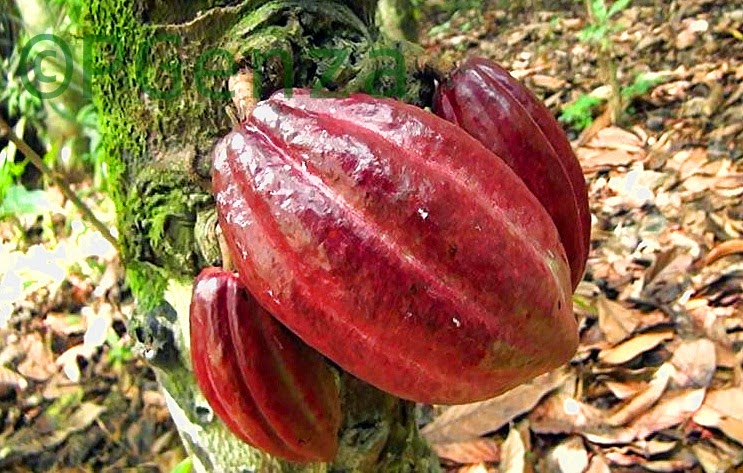
Walking through a peaceful cacao plantation on an overcast morning the next day, birds chirping cheerily in the sky, I stopped by a tree with three beautiful maroon cocoa pods. Pointing my camera lens at them, they seemed to look straight back and smile at me. With no premeditation, I smiled back, clicked away some more and waved to them as I walked off thinking: Mothers deserve to know their children, anything less is an affront to and a rape of their dignity.
My Three Maroon Friends

Friday, 5 July 2013

Footsteps to debauchery

Dear Friend, this is my experimentation post, a sketchpad of sorts. As such it is bound to change as often as I sketch, kindly bear with me and read the finished products above.

Prologue: End of the long wait

The incessant vibration eventually stirred me out my reverie. Slowly regaining my focus, I remembered that the call was expected at the half-hour mark. Not a minute before, not a minute after; precision was their mantra. Without turning my head or taking my feet off the pillow at the end of the rickety bed, I reached over and rummaged through the rumpled beddings till I located the phone. I pressed the accept button and put it to my ear.

"Hello!"

No response.